
Visa & procedures
Ausbildung visa for Germany from Morocco in 2026: requirements, full document list and German level
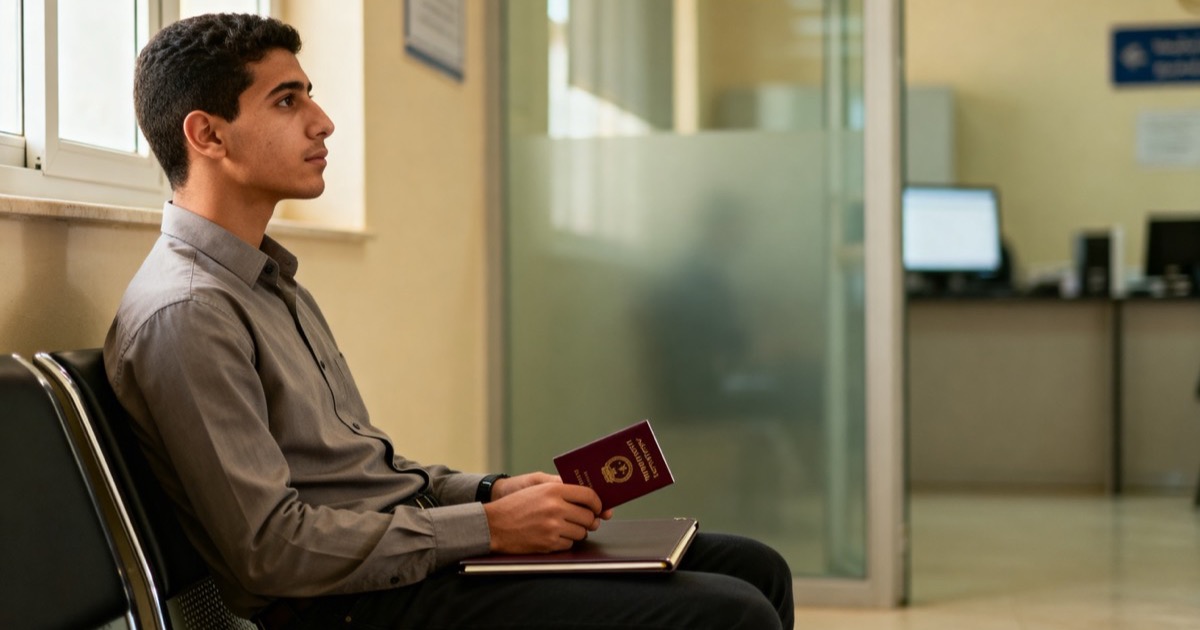
The Ausbildung is Germany's dual vocational training system: you work in a company and study at a vocational school (Berufsschule), while being paid from the very first month. To do it from Morocco you need a national type D visa, the "Ausbildungsvisum", applied for at the German embassy in Rabat. The three non-negotiable requirements are: a signed training contract (Ausbildungsvertrag), a certified German level of at least B1, and a secondary-school diploma. This guide sets out the full document list, the timelines and the mistakes that get applications refused.
Key takeaways
- The Ausbildung visa is a national type D visa, filed at the German embassy in Rabat, not a short-stay Schengen visa.
- Three cumulative requirements: a signed Ausbildungsvertrag, a German certificate of at least B1 (B2 recommended, effectively compulsory in care work), and a secondary-school diploma.
- The Ausbildung is paid: roughly €1,000-1,300 gross per month in year one, rising every year of the contract.
- Allow 2 to 4 months between filing and the decision, and up to 6 months in peak season — plan well ahead.
- Without a signed contract there is no Ausbildung visa: finding an employer is genuinely the first step, not the last.
What exactly is an Ausbildung?
Ausbildung translates as "vocational training", but the German word refers to a very specific system: dual training (duale Ausbildung). It lasts two to three and a half years and alternates between two places — the company, where you usually spend three to four days a week, and the Berufsschule, the vocational school, where you cover the theory the rest of the time. At the end you sit an exam before the chamber of commerce or crafts (IHK or HWK) and obtain a vocational qualification recognised throughout Germany.
The key difference from a Moroccan training course or an internship: you are an employee for the whole duration, with an employment contract, a salary, social security cover and paid leave. It is not a student programme, it is a job that trains you — and that is precisely what makes the visa possible.
- Duration: 2 to 3.5 years depending on the trade, with the option to shorten it for very strong results
- Rhythm: company / Berufsschule alternation throughout the contract
- Status: employee in training (Auszubildender, "Azubi"), not a student
- Qualification: an IHK or HWK certificate recognised across Germany and the EU
- After the Ausbildung: permanent hiring is very common, then access to a skilled-worker residence permit
What are the requirements for the Ausbildung visa?
The German embassy in Rabat checks three blocks of requirements. If one of them is missing, the application is refused without the rest being examined — there is no point filing before you have gathered them all.
| Requirement | What is required | Proof to provide |
|---|---|---|
| Training contract | An Ausbildungsvertrag signed by a German company | Original contract signed by both parties, with dates and trade |
| German level | At least CEFR B1; B2 recommended and effectively required in care work | A valid Goethe, telc or ÖSD certificate |
| Diploma | Baccalaureate or an equivalent secondary-school qualification | Diploma and transcripts, translated and legalised |
| Means of subsistence | A sufficient Ausbildung salary, otherwise a supplementary blocked account | Contract stating the pay, or a Sperrkonto |
| Health insurance | Cover valid from arrival | Proof of enrolment or travel insurance until enrolment |
An important clarification about language: "Ausbildung without German" does not exist. Some agencies promise departure with an A2, or even with no certificate at all. In practice the embassy requires certified proof of level, and the Berufsschule teaches entirely in German — a candidate below B1 drops out within the first months. B1 is the legal floor; B2 is the level that actually lets you succeed.
The full application file to submit at the Rabat embassy
The file is submitted by appointment, in two sets (the original and a complete copy), arranged in the order required by the form. A disordered or incomplete file is rejected at the counter without being processed.
- 1National visa application form (type D), completed and signed, with the declaration under § 54 of the Residence Act.
- 2A passport valid for at least one year, with two blank pages, plus copies of every used page.
- 3Two recent biometric passport photos in the German format.
- 4The Ausbildung contract (Ausbildungsvertrag) signed by the company, original and copy.
- 5The German certificate (Goethe, telc or ÖSD), at least B1, original and copy.
- 6The baccalaureate diploma and transcripts, translated into German by a sworn translator and legalised.
- 7A German CV (Lebenslauf) in tabular format and a motivation letter in German.
- 8Proof of means of subsistence: the pay stated in the contract, or a blocked account (Sperrkonto) if the salary is deemed insufficient.
- 9Proof of health insurance covering the period between arrival and enrolment in the German health fund.
- 10Proof of accommodation in Germany, where the employer or school provides one.
- 11Proof of payment of the visa fee (around €75, in dirhams at the day's rate).
All Moroccan documents (diploma, transcripts, birth certificate) must be translated into German by a sworn translator and legalised. This is the step that takes longest: start the translations as soon as you have your contract, not after you get your appointment.

How much do you earn during an Ausbildung?
Apprentice pay (Ausbildungsvergütung) is set by collective agreements and rises with each year of the contract, within a legal minimum that is revised annually. The figures below are gross orders of magnitude, before social contributions and tax.
| Training year | Gross range / month | Note |
|---|---|---|
| Year 1 | ~€1,000-1,300 | The care sector (Pflege) is among the best paid |
| Year 2 | ~€1,100-1,400 | Automatic increase provided for in the contract |
| Year 3 | ~€1,200-1,500 | Final year, IHK / HWK exam at the end |
| After the Ausbildung | ~€2,400-3,300 gross | Qualified professional salary on hiring |
This salary is generally enough to satisfy the means-of-subsistence requirement without a blocked account. It remains modest against German rents, though: ask about the accommodation offered by the employer — very common in care work and hospitality — before signing.
Timelines, costs and the mistakes that get applications refused
Between filing and the decision, allow two to four months in a normal period, and up to six months between June and September, when applications pile up ahead of the August intake. The appointment itself can take several weeks to obtain: book it as soon as your contract is signed, even if your translations are not ready yet.
- Filing without a signed contract, hoping to "sort it out later": automatic refusal.
- Submitting a language-school attestation instead of a Goethe, telc or ÖSD certificate: it is not admissible proof of level.
- Providing translations that are not sworn or not legalised: the file is sent back.
- A passport valid for less than a year or with no blank pages: blocked at the counter.
- Inconsistencies between the CV, the contract and the diploma (dates, job title): a request for clarification and weeks of delay.
- Using an agency that promises a "guaranteed" visa for a fee: no agency decides in place of the embassy.
Reaching B1 or B2 for free with Devoxa
Of the three visa requirements, language is the only one you fully control, and you can start today, before you even have an employer. A candidate who is already certified at B1 or B2 answers Ausbildung offers months ahead of everyone else — and that is often what makes the difference.
- A complete A1 → B2 pathway in French and Arabic, free and with no time limit
- Targeted preparation for the telc and Goethe exams the embassy requires
- Vocabulary by trade: care work (Pflege), technical, construction, logistics, hospitality
- German job-interview simulations with an AI tutor available 24/7
- Help writing your Lebenslauf and motivation letter in German
- Progress tracking so you know when you are ready to book your exam
Reach the level required for your Ausbildung visa, for free
Start for freeAbout the author
Devoxa Teaching Team
The Devoxa teaching team brings together German teachers, native speakers and specialists in the Morocco → Germany professional immigration path. Our content is built on the Common European Framework of Reference (CEFR) and on the real requirements of the TELC and Goethe-Zertifikat exams, so every guide is reliable, up to date and immediately useful.
Frequently asked questions about the Ausbildung visa from Morocco
What are the requirements to go to Germany for an Ausbildung?
You need three things together: an Ausbildung contract (Ausbildungsvertrag) signed by a German company, a German certificate of at least B1 issued by the Goethe-Institut, telc or ÖSD, and a secondary-school diploma translated and legalised. On top of that come a valid passport, health insurance and proof of means of subsistence.
Can you do an Ausbildung with a B1?
Yes, B1 is the minimum level the embassy accepts for the Ausbildungsvisum. But many employers require B2, and it is almost systematic in the care sector. With a bare B1 the Berufsschule stays hard in the first year: if you can reach B2 before leaving, your chances of being hired and of succeeding rise sharply.
Can you do an Ausbildung without German?
No. "Ausbildung without German" offers lead to no visa: the embassy requires certified proof of level, and Berufsschule teaching is entirely in German. The only realistic route is to reach at least a certified B1 before applying, then keep improving once you are there.
How long does the Ausbildung visa application take?
Allow two to four months between filing a complete application and the decision, and up to six months in peak season (June to September). The appointment at the Rabat embassy often takes several weeks to obtain on its own: book it as soon as the contract is signed.
What is the salary of an Ausbildung in Germany?
Apprentice pay is around €1,000-1,300 gross per month in the first year and rises each year of the contract, reaching roughly €1,200-1,500 in the third year. After qualifying, a skilled professional generally starts between €2,400 and €3,300 gross.
Do you need a blocked account (Sperrkonto) for the Ausbildung visa?
Not always. If the pay stated in the contract covers the required minimum living cost, it is enough to prove means of subsistence. A blocked account is only requested when the salary is deemed insufficient, notably for the lowest-paid Ausbildungen or when accommodation is not provided.
How do you find a company for an Ausbildung from Morocco?
Apply directly to companies and on German job portals, with a Lebenslauf in the German format and a motivation letter in German. The sectors that recruit the most foreign candidates are care work, technical trades, construction, logistics and hospitality. Already holding a B1 or B2 certificate makes your application far more credible.
What happens after the Ausbildung ends?
You obtain a recognised vocational qualification (IHK or HWK) and can be hired by the company that trained you, which is very common. You then move onto a skilled-worker residence permit, which in time opens the way to permanent residence in Germany.